At the Museum – Why are the Oddfellows… “Odd”?
PROTECTED CONTENT
If you’re a current subscriber, log in below. If you would like to subscribe, please click the subscribe tab above.
Username and Password Help
Please enter your email and we will send you a password reset link.
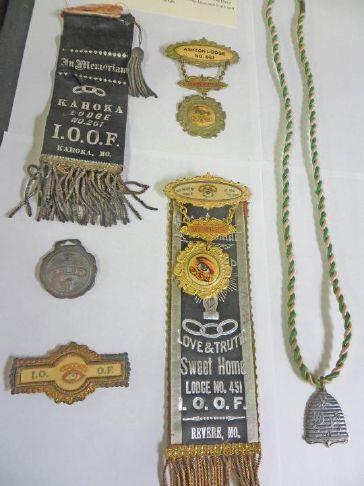
The organization presently known as the Oddfellows was started in 1730 in England, then called the Manchester Unity Oddfellows. In 1819, Thomas Wildey started the first lodge, Washington Lodge #1, in North America in Baltimore, Maryland. It is still active today. Headquarters for the U.S. lodges, known as the Sovereign Grand Lodge, is located in Winston-Salem, North Carolina. The first Missouri lodge, #1 Travelers Rest, was chartered in St. Louis in 1835. Missouri’s Grand Lodge (state headquarters) was then chartered in 1838 in St. Louis. The Grand Lodge is presently located at Fulton. The location of the annual meeting is determined each year by the newly elected Grand Master. It has been held at Jefferson City for the past few years.
The Independent Order of Oddfellows was initially intended as a non-political, non-sectarian fraternal mutual aid society limited to Caucasian males, ages 21 and over. The ladies auxiliary, Rebekahs, started in 1851, with comparable race and age requirements. This was the first fraternal organization to include both men and women. The St. Louis area had several Jewish and German lodges. In 1843, the Grand United Order of Odd Fellows (GUOOF) was founded for African-Americans. Its roots were also from an English group founded in 1789. GUOOF headquarters are in Philadelphia, Pennsylvania. The Household of Ruth is the auxiliary group for African-American women and families. The newest GUOOF lodge is #12268 of Birmingham, Alabama, chartered in 2015. In 1971, the word “white” was dropped as a requirement for IOOF and Rebekah membership. In 2001, women were accepted into IOOF lodges for the first time. Additional groups affiliated with IOOF are: Cantons, Encampments, Patriarch Militants, Ancient Mystic Order of Samaritans (AMOS), Junior Lodges, Theta Rho Girls’ Clubs, United Youth Group and Cadet Corps.
The purposes of these organizations were to visit the sick, relieve the distressed, bury the dead and educate the orphan. At the time, it was considered unusual, or “odd” to provide these services for persons other than relatives. This accounts for the word “odd” in the organization’s name. The lodges consisted mostly of skilled craftsmen and lower class workers, although there were also many well-known members. These included Wyatt Earp, P.T. Barnum, Charlie Chaplin, Charles Lindbergh, Al Pinkerton and President Theodore Roosevelt. Some famous members of the Rebekahs were Julia Grant, Lucy Hayes and Eleanor Roosevelt, all wives of presidents. Both the men’s and women’s groups were most active prior to the growth of the commercial insurance industry, Roosevelt’s New Deal and the Depression of the 1930’s.
There were 9 active IOOF lodges and 9 Rebekah lodges in Clark County at one time. Some closed; some consolidated with other lodges. The Kahoka lodge #261 was the last lodge to close in Clark County in 1982. The museum is compiling a list of local people who belonged to these organizations, so please contact the museum with the names of known members or pictures or memorabilia that can be photographed for the museum’s collection. Watch this column for more information in the future about local IOOF and Rebekah lodges.
Related Posts
Uncertain Future for Kahoka Blood Drives