With Warmer Water Comes Another Hunting Opportunity
PROTECTED CONTENT
If you’re a current subscriber, log in below. If you would like to subscribe, please click the subscribe tab above.
Username and Password Help
Please enter your email and we will send you a password reset link.
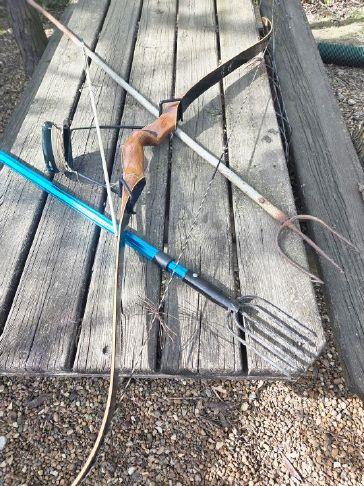
I have been working with my lightest-weight bow, attempting to be able to draw and hold it for a short time. I am not preparing for the fall archery season—though I wish I could. Since undergoing a couple of back surgeries a few years ago, and with arthritis settling in my left hand, my strength is not what it once was. Still, I’m hopeful that I will be able to quickly draw my bow and release it once I reach my anchor point at the corner of my mouth.
That is, if and when the time comes to go after rough fish spawning in backwaters and flooded ground—if it happens. I must be honest: I’d just as soon it not occur, out of concern for the farmers near creeks and rivers in our county. If I am able to shoot the bow, I will use my lightest-weight one, which raises the next question: What arrow should I use?
I will use a heavy-duty fiberglass bowfishing arrow that can travel through water with enough force to penetrate the scales of a rough fish—especially if I happen to hit it in the nearly armor-like gill plate. That was never a problem with my 45-pound hunting recurve, but this 30-pound target recurve I’m working with now may require me to get much closer to my target. It may also mean I won’t be able to take the shot unless the fish’s back is exposed out of the water.
It was always a simple method. I’d wear an old pair of cutoffs and sneakers, carry my bow and a snap-on fish stringer, and attach the stringer to a stick strong enough to hold it in place and keep the fish from escaping.
My earliest bowhunting experiences came at Rose Pond, which in the spring would flood the ground we owned on its east side. I would wade into the shallow water and watch—or often hear—fish splashing during spawning. I have since repeated that process countless times over the years during high water when carp were spawning in flooded fields.
The only things that have changed are the bows I’ve used—and that sometimes I didn’t use a bow at all. You can stalk close enough to gig the fish. Gigging really takes hunting back to its most basic form. You feel as though you’re returning to the very roots of all hunting—with a sharp stick.
I mentioned the simplicity of the sport, so let me break down the gear you actually need. First, a bow. I contend that the recurve bow truly shines here because of its simplicity. You don’t need sights, stabilizers or other gear that can become entangled in the fishing arrow line.
The fishing arrow is typically a heavy fiberglass arrow. Its weight helps it resist slowing down in the water so it can strike the fish with enough force to penetrate. The arrow has barbs at the end to hold the fish, and the point unscrews so you can release the fish after landing it. Normally, loosening the point allows the barbs to reverse, making it easy to pull the arrow back out.
You’ll need a line from the arrow to your bow. That line is stored on a spool or reel. When I first started bowfishing, I had about 20 yards of line attached to my belt loop. I held it in my off-hand and dropped it before drawing the bow. But a line spool simplifies things and helps prevent the line from tangling in weeds.
If you don’t like wading in shorts or jeans, you may want to consider waders or hip boots. And, aside from a license, the final thing you’ll need is a way to carry your catch, such as a stringer or floating fish basket.
There’s a trick to being successful at bowfishing or gigging: understand light refraction. Water creates an illusion that fish are shallower than they appear. The rule is to aim below the fish—and the deeper it is, the lower you aim. It sounds complicated, but it becomes second nature with practice. In shallow water, it’s a minor factor since the fish are just beneath the surface.
Carp are the easiest to take during spawning because they’re solely focused on reproduction. Spawning begins once water temperatures reach between 64 and 75 degrees. Don’t rely on reported river temperatures, since shallow water warms more quickly. Look for grassy shallows between two and three feet deep.
You’ll often see one female with five or six males nudging her to encourage her to lay eggs, which are fertilized externally. This explains why carp are found in groups. Also look for muddy water stirred up by their activity. Spawning typically lasts seven to 14 days.
Stalking fish was my first bowhunting experience. I have an old Fred Bear book that advises caution in your approach—just as you would with game animals. Despite their reputation, carp are among the smartest fish. They can sense movement and, when spooked, emit pheromones that alert other fish to danger.
Right now, I’m waiting for a call from a good friend who lives near the river and loves gigging rough fish. When the call comes, I’ll drop everything and go. I hope my grandson can join us. I bought him a new gig last year, but we never had the chance to use it. I may even let him use the old gig that belonged to Dad. It’s so old—it’s even older than I am, which makes it ancient!

Related Posts
Uncertain Future for Kahoka Blood Drives